
Tom Ahearne ’81 says he is the opposite of a man with a plan. So much so that he only applied to Notre Dame because a family friend from church, Tom Campbell ’54, filled out the application for him and told him, “All you have to do is sign it, put it in this stamped envelope, and drop it in the mail,” Ahearne laughs as he recalls that pivotal moment in his life.
So that’s what Ahearne did. And in the meantime, the self-described “gearhead” figured that he’d work at the local auto repair shop near his home in northern Virginia, where his family had settled after years of moving around the country for his father’s Air Force assignments.
Ahearne had no expectations of what Notre Dame college life would be like since he hadn’t planned on it. But he made the most of it—an attitude that became his trademark when unexpected challenges and opportunities arose.



After graduating from Notre Dame with a degree in economics, he went to law school—but that, too, was an unplanned matter of chance.
“I didn’t plan to go to law school, but my econ professor Charles Craypo signed me up for the LSAT and told me that since he couldn’t get his money back, I might as well take it,” Ahearne says. So he did, and scored well enough to earn a full scholarship to the University of Chicago.
But he still wasn’t sold on going to law school. That is, until University President Rev. Theodore Hesburgh, C.S.C., ’39 showed up at his door in Cavanaugh Hall.
They knew each other because Ahearne sometimes went to Hesburgh’s office to say hello, when he saw the light on in Hesburgh’s office below the Golden Dome in the administration building at night. But their only substantial conversation was that time in Cavanaugh.
“He told me, ‘You know, I understand you did really well on the LSAT. You should go to law school,’” Ahearne says. “And he told me that parable of the talents from the Gospel of Matthew, [about using the gifts God gives you]. Growing up around the Air Force’s falcon mascot, I had previously thought that Gospel reading was about falcon talons, not talents,” Ahearne adds with a laugh.”
Fr. Hesburgh’s visit prodded Ahearne to become the lawyer he is today, upholding constitutional rights, election integrity, and civil rights.
But like his entry into law school, the significant cases he took on and won often came to him as a matter of serendipity rather than careful planning. “The major things I’ve done are things I’ve lucked into,” Ahearne says. “Plus, I’m very competitive. I like winning.”
That’s the attitude you want from your lawyer when you’re fighting for equal funding for public schools, as he did in the yearslong McCleary vs. the State of Washington litigation. Ahearne represented two families in that case, successfully arguing that the State of Washington was not meeting its constitutional duty to amply fund its public schools, resulting in a court ruling that increased annual state public school funding by $6 billion.
He landed that McCleary case because he had a reputation for winning tough constitutional law cases, a reputation he earned in another moment of chance. He happened to be the only litigator in the office on a weekend when the call came in to file a lawsuit immediately. A city wanted to challenge the constitutionality of a new law that reduced the car license fees that local governments need to fund roads and transportation.
“After winning that constitutional law case, I won several other cases getting certain initiative measures declared unconstitutional, which gave me the reputation for knowing about constitutional law, which then led to the McCleary case.”
As for ensuring fair elections, Ahearne first did that in the early 2000s when he represented the Washington Secretary of State during a closely contested election for governor, as ballot counting lawsuits were being filed across the state.
Ahearne never planned to be an election lawyer. He was tapped for those lawsuits because the lawyer who usually represents the Secretary of State—the State Attorney General—was unable to, since she was one of the candidates.
Ahearne originally declined the case, because he didn’t want to miss an upcoming bow hunting trip, but the managing partner of his firm overruled, creating another chance opportunity for Ahearne to ensure each and every lawful ballot was correctly counted in that election. In the end, after a trial, the result was decided by only 133 votes out of over 2.8 million cast.
The phrase “liberty and justice for all” from the U.S. Pledge of Allegiance is a guiding principle for Ahearne, and he’s spent his career upholding those words in his courtroom and community work. But that work was disrupted in 2014 when a snowboarding accident shredded his spinal cord at his lowest rib, paralyzing his legs and putting him in a wheelchair for the rest of his life.
Before the accident, Ahearne had always been an enthusiastic adventurer, enjoying snowboarding, bowhunting, and motorcycle racing. “Between bowhunting—where we were hunting the deer and elk deep in the mountains while the wolves and cougars were hunting us—and then motorcycle racing—where every year I crashed and got airlifted—I figured, there’s no way I was going to live into my 50s,” Ahearne says.
He struggled through months of surgeries and rehabilitation therapy, went back to work, and changed his physical activities to swimming and handcycling—annually completing in the 206-mile Seattle To Portland (STP) bike race and many other long (and steep) bike races in the Pacific Northwest mountains.
He’s adapted, but does not have a Pollyanna attitude about the challenges he now faces.
“I hate this ‘being paralyzed’ stuff,” Ahearne says. “But it has forced me to think about why I am still here. And if that Jesus fellow actually did exist, what am I doing to live out the Gospel he preached?”
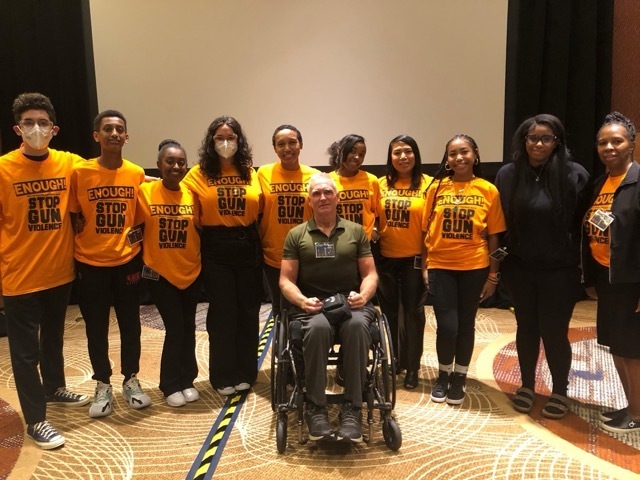
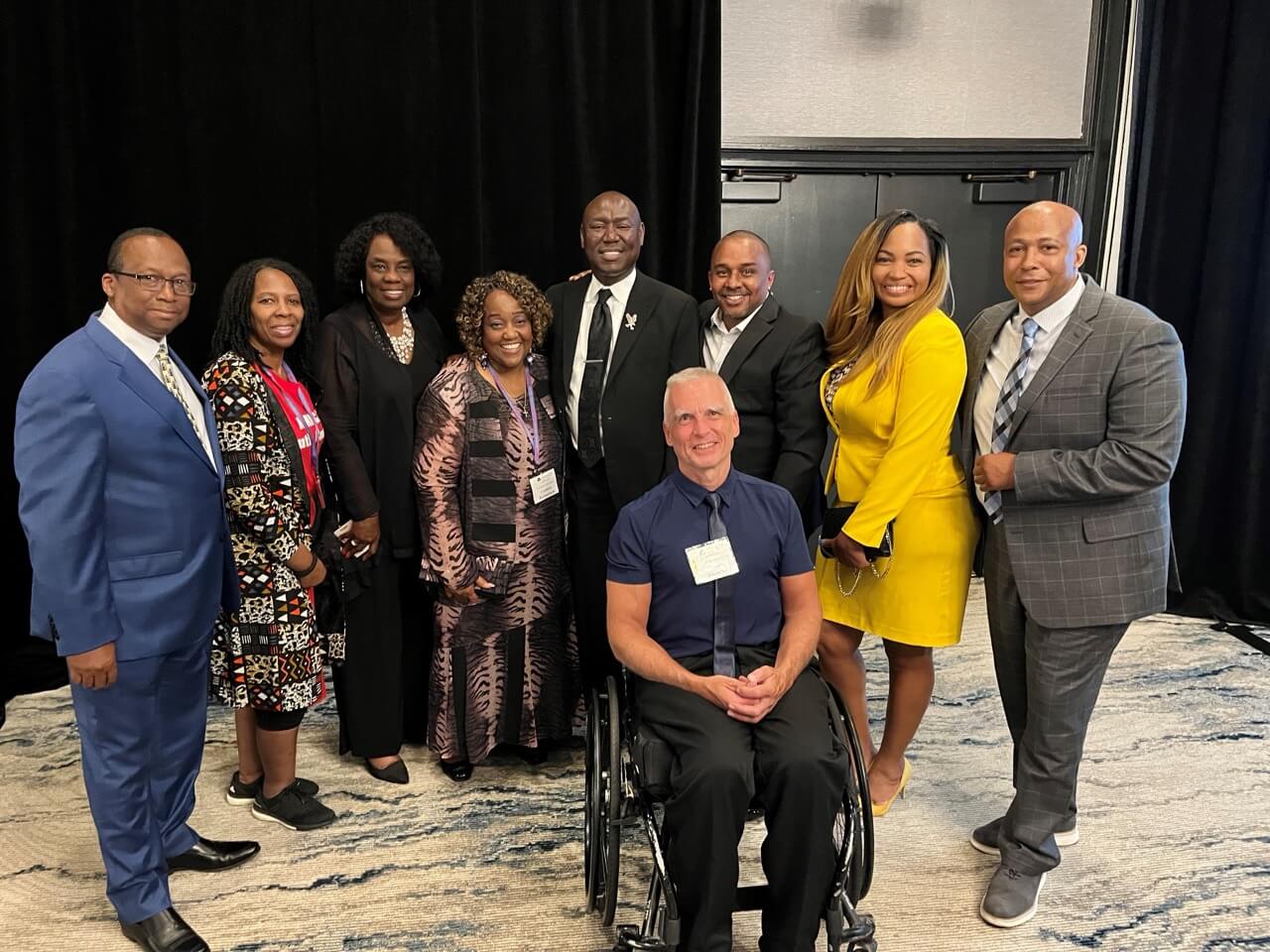
His own physical limitations have motivated him to become an advocate for others who are isolated, excluded, or denied fair opportunities. He expanded his public service work to include five years on the executive board of the NAACP’s Alaska/Oregon/Washington Conference, leads a Disability Awareness Program in his hometown Bainbridge Island School District, and serve as the State-wide elected Diversity, Equity, and Inclusion Governor on the Washington State Bar Association’s Board of Governors.
In 2025, the Notre Dame Alumni Association honored him with the Rev. John J. Cavanaugh, C.S.C., Award for public service.
“The thing that I loved and appreciated about getting the Cavanaugh Award is that it made me look back and realize that while I never had a meaningful plan for my life, God obviously did,” he says. “And what I’ve experienced and learned from my accident has made me believe that Jesus actually does exist, and expects us to do God’s work here on Earth.”


