
The pursuit of justice isn’t one that ends in the courtroom. For Anna McGinn ’22 J.D. and her clients at the Great North Innocence Project, it’s a lifelong commitment.
The organization, which primarily serves clients in Minnesota, North Dakota, and South Dakota but also operates nationwide, works to restore freedom to those wrongly convicted and to reform the criminal justice system by educating legal professionals on best practices. As a staff attorney, McGinn works to ensure the law is applied fairly and not weaponized in the pursuit of a conviction.
McGinn joined the Great North Innocence Project as one of Notre Dame Law’s 2022 Bank of America Foundation Fellows. Over two years, she worked as an associate on exoneration cases, assisting the organization’s managing attorneys. After completing her fellowship, she was hired full-time.
Although she currently resides in Minnesota, McGinn’s journey to law also began in Minneapolis — where she was born and raised. Guided by her family and her Catholic faith, values of justice and compassion have always been central to her personal ethos.
“My parents really instilled in me the value of working hard and using your gifts and your talents to help others,” McGinn said. “I’ve tried to maintain that same energy throughout my adult life, and my decision to become a lawyer.”


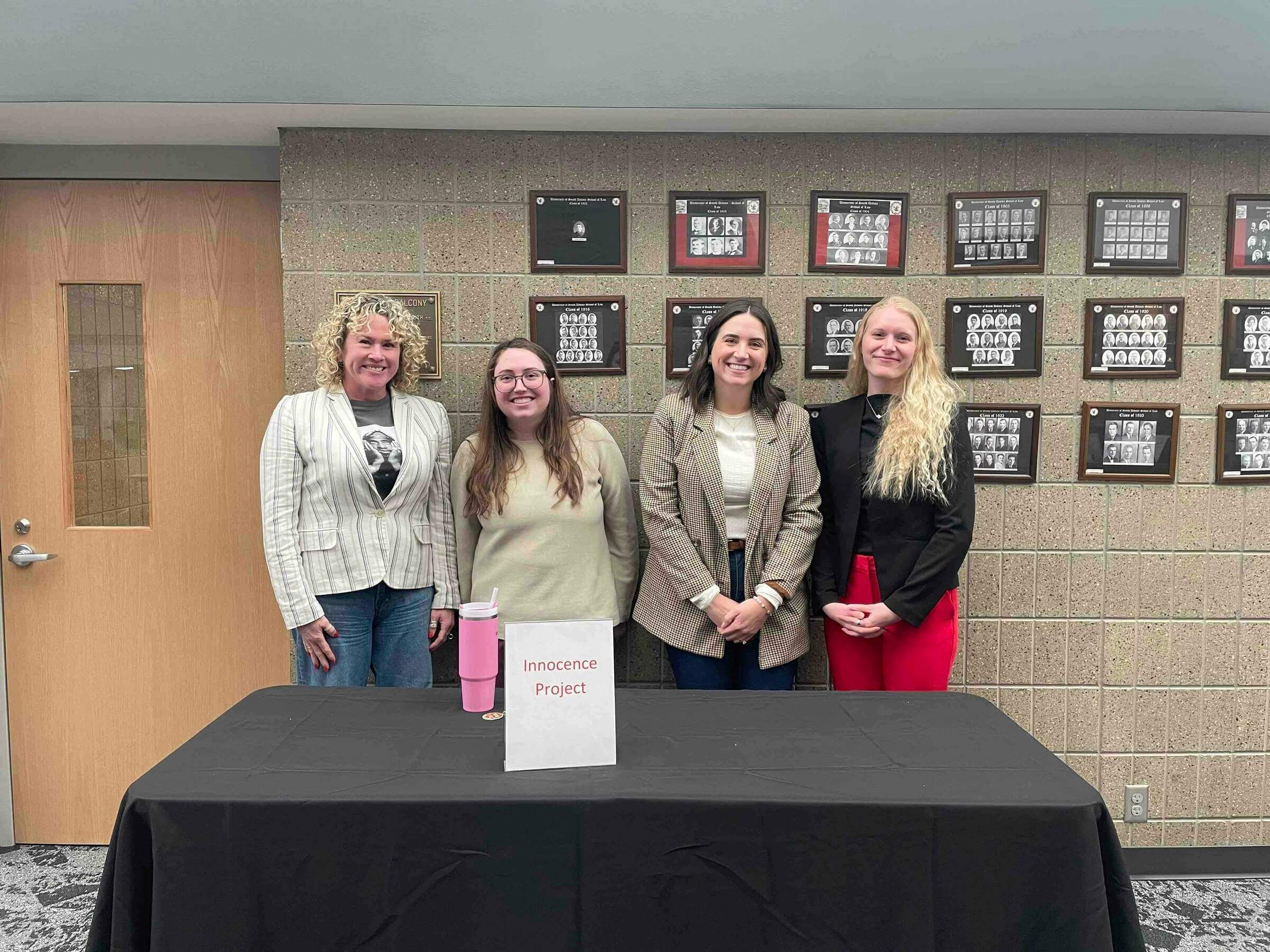
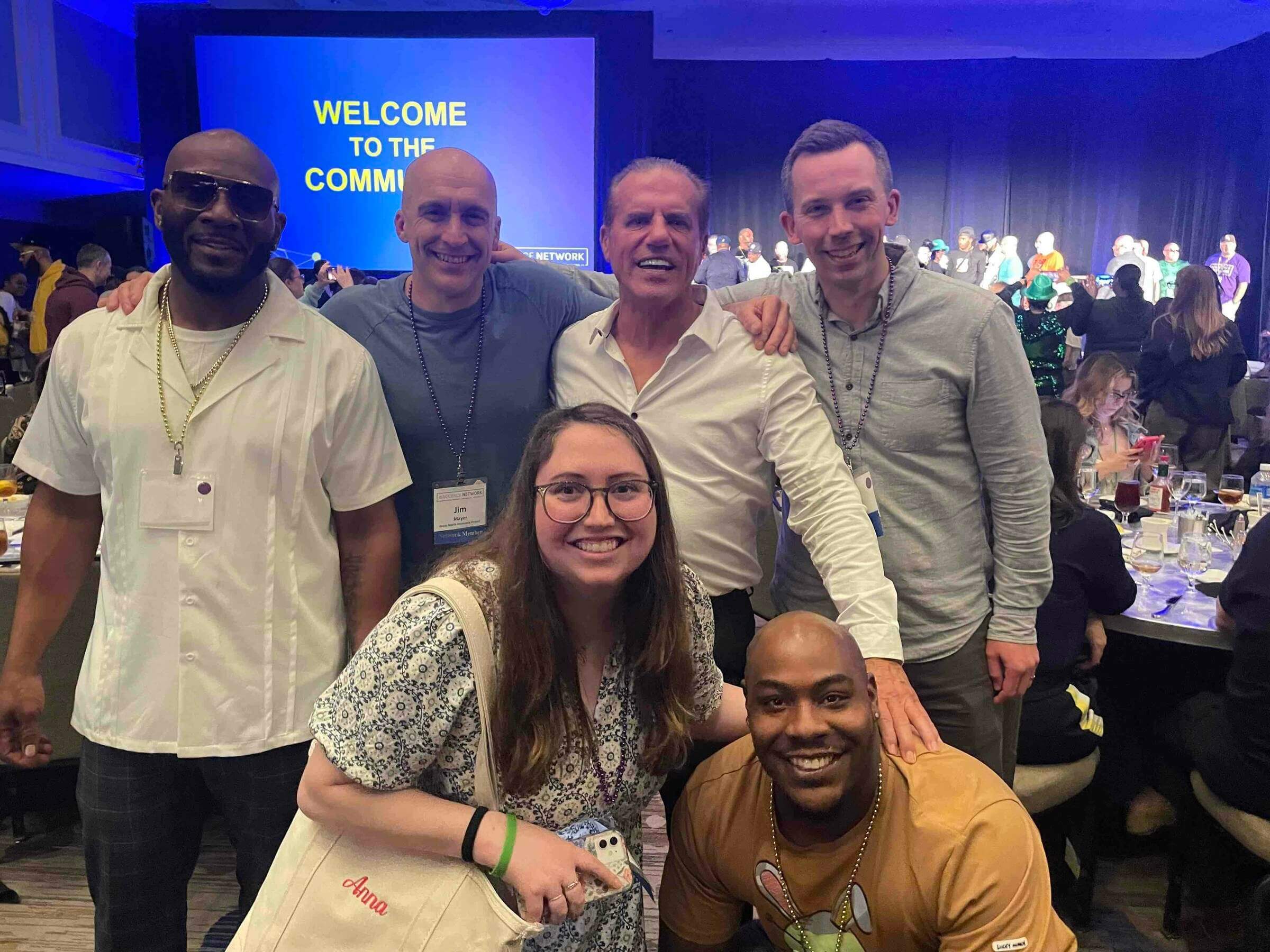


McGinn chose to attend the Notre Dame Law School for many of the same reasons: its commitment to cultivating strong, moral, and socially conscious students.
She was also drawn to the University after hearing about it from her brother, Tommy McGinn ’21, ’22 M.S., who was an undergraduate while she was applying to law school. He spent his breaks on various service and immersion trips offered by the school, a testament to Notre Dame’s commitment to its students and their education.
“I wanted to make sure that my legal education had components of that service learning and the emphasis on using your education, knowledge, and privilege for good.”
While a student at the law school, McGinn participated in the Applied Mediation Clinic with Michael Jenuwine, the clinic’s Director and a Clinical Professor of Law, where she gained experience in family mediation and conflict resolution, ultimately earning the title of registered mediator in the state of Indiana. Through the clinic, McGinn assisted with cases involving divorce settlements, parenting plans, and child custody disputes.
“I learned that any way you can resolve conflict outside of the court system is generally better,” McGinn said.
Although she wasn’t directly a part of the University’s Exoneration Justice Clinic, McGinn took several classes focused on post-conviction litigation. Her growing interest in criminal law grew through getting proximate to people and places affected by injustice, bearing witness to their resilience — something she had been doing even before becoming a law student.
McGinn attended Carleton College as an undergraduate in southern Minnesota, where she studied religion and philosophy while also a dedicated athlete on the varsity swim team. As a strong reader and writer, she thought law would be a good fit, but it wasn’t until the summer before her senior year, when she worked as a judicial intern in the chambers of the late Judge Steven Rau, that she was truly inspired to pursue law school.
Spending her summer attending criminal arraignments, trials, and evidentiary hearings, McGinn became deeply invested in law processes, an experience that later informed her work with the Great North Innocence Project.
After graduating with her bachelor’s degree in 2018, McGinn took a gap year and did service work through AmeriCorps, working in the Minneapolis Public Schools’ credit retention and recovery program. Her work involved managing a caseload of students who were habitually truant or at risk of dropping out, making sure they got to school and helping to address the issues preventing them from attending regularly.
Her gap year not only allowed her to support her community in a meaningful way, but it also provided a lens through which she saw inequity more clearly.
“There were students that lived not too far from where I grew up who were facing a lot of hardship, and those issues fell mostly on racial lines,” McGinn said. “Black students ended up suffering more based on systemic issues within Minneapolis city governance, and that was really eye-opening for me.”
These issues extend beyond just the state level, and through her studies and work, McGinn witnessed how socioeconomic disadvantages and incarceration can derail a life.
“[Americans] amount to about four percent of the world’s population, and one in four people who are in prison are in prison in the United States,” McGinn said. “We incarcerate at a higher rate, and mistakes are made.”
One of those cases was that of Marvin Haynes, a Minnesota man wrongfully convicted of first-degree murder at the age of 16 and sentenced to life in prison.
“When you first read Marvin’s story and you look at the evidence, his innocence jumps out on the page” McGinn said. “Eyewitnesses to the crime provided a fairly detailed description of the assailant as a Black male, 5-10 or 5-11, around 180 pounds, and he had short cropped hair.”
But, when police arrested Marvin he had a large, natural Afro. He was also 5-7 and around 50 pounds lighter than the eyewitness account. He did not fit the description of the shooter.
“Police got around this problem by providing the eyewitnesses with an old photograph of Marvin, where he had a shaved head, through a series of very suggestive eyewitness identification procedures that violated both Marvin’s constitutional rights and Minneapolis Police Department procedure.”
McGinn and the Great North Innocence Project investigated Hayne’s case for over a year and on December 11, 2023, he was exonerated — just days after his 36th birthday. Haynes had spent 19 years in prison for a crime he did not commit.
For many of their clients, the process isn’t as quick, with some cases taking years from the time they begin pursuing exoneration. And while some of their cases are successful — like Haynes’ — some don’t result in the outcome they hope for.
As of the end of 2024, the Great North Innocence Project has freed 13 innocent people since its founding in 2001—individuals who collectively served 173 years in prison for crimes they did not commit. Yet, estimates show that between 2% and 7% of those incarcerated are wrongly imprisoned.
“Obtaining justice for them is truly one of the greatest feelings, but for that reason, our losses are really gut-wrenching and make you question your ability as an attorney and your judgment of the world and our legal system,” McGinn said. “Nonetheless, I think we provide hope every time we take on a case, and that’s very meaningful.”
Doing work that is impactful and personally fulfilling is incredibly important to McGinn. She encourages students with similar passions to take risks and pursue what speaks to them, regardless of what others are doing or saying.
“I think there’s a lot of pressure when you go to these prestigious institutions to get a job that’s really prestigious. And for some people that’s very meaningful and a great career path, but for others, it’s not. And for me, it wasn’t,” McGinn said. “I think it’s really important that students stay true to their passions and what they think is going to serve them and their souls.”
McGinn's work is not easy, but it’s important, and for her and those at the Great North Innocence Project, the pursuit of justice for the innocent is worth all the effort.


