
Dr. Elizabeth Berry-Kravis ’79 has never shied away from a challenge. From being one of the earliest women to enroll at Notre Dame to her career as a pediatric neurologist specializing in a genetic disorder known as fragile X syndrome, she has not only led numerous clinical trials, but has also undergone many trials and challenges of her own.
Berry-Kravis is a professor of pediatrics and neurological sciences, cell biology, and anatomy at Rush Medical Center in Chicago. In addition, she is the director of the RUSH Pediatric Neurosciences F.A.S.T. Center for Translational Research.
While she wears many hats, the center of her work is conducted in her Fragile X Clinic, which she established in 1992. There, Berry-Kravis studies fragile X syndrome, the most common inherited form of intellectual disability, resulting from an FMR1 gene mutation that disrupts production of a vital brain protein. This causes patients to develop physical abnormalities, developmental delays, learning disabilities, anxiety, and a range of other health issues. Her clinical program works to better understand the patient's condition and take steps towards ultimately finding a drug to treat the underlying disorder.
“Over the years, I’ve gone in a lot of different directions and collaborated with a lot of different people,” she said. “But that is one of the most attractive things about the fragile X field, for me— is the way we all work as a group and try to build upon what the others are doing.”
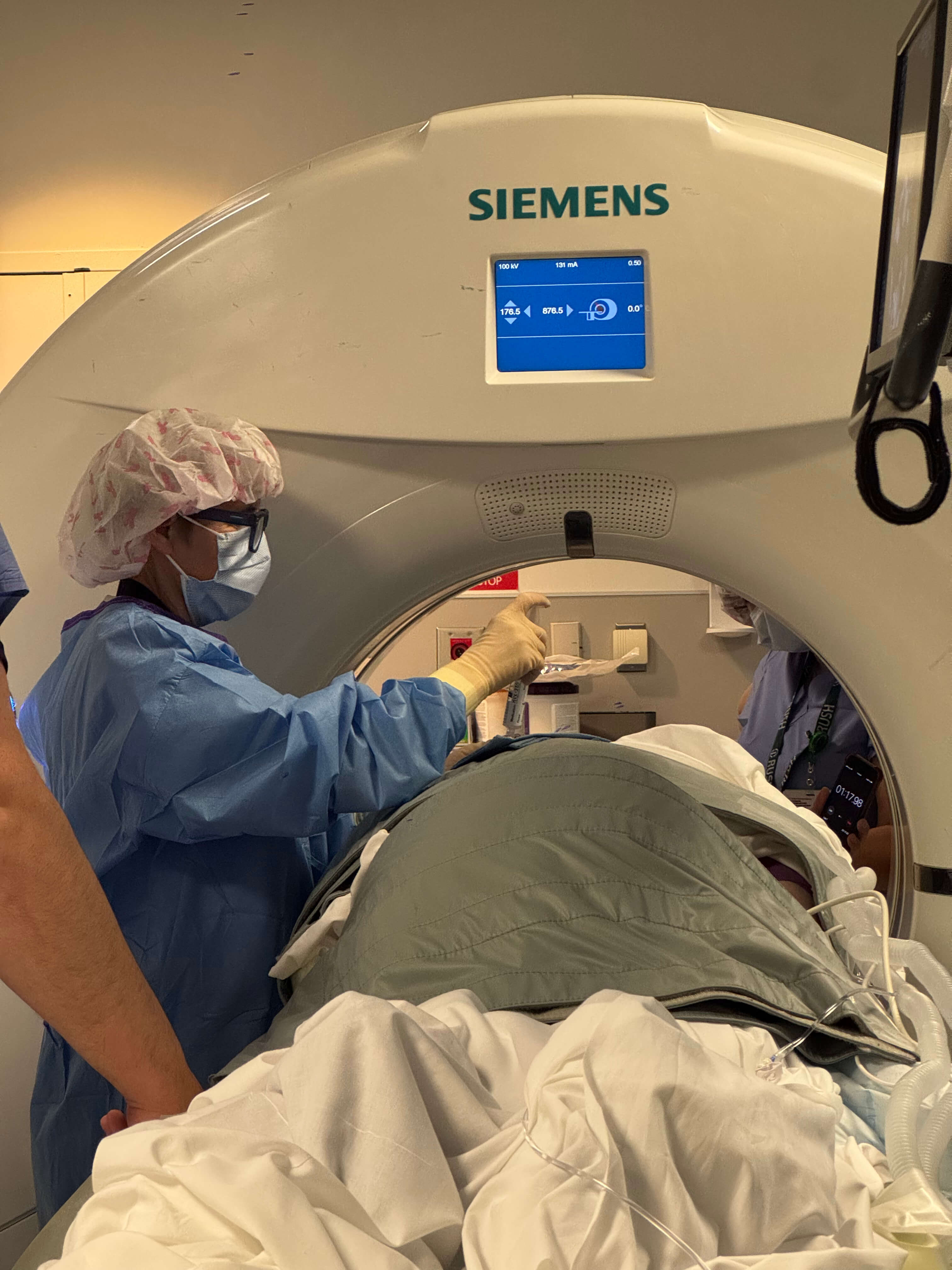





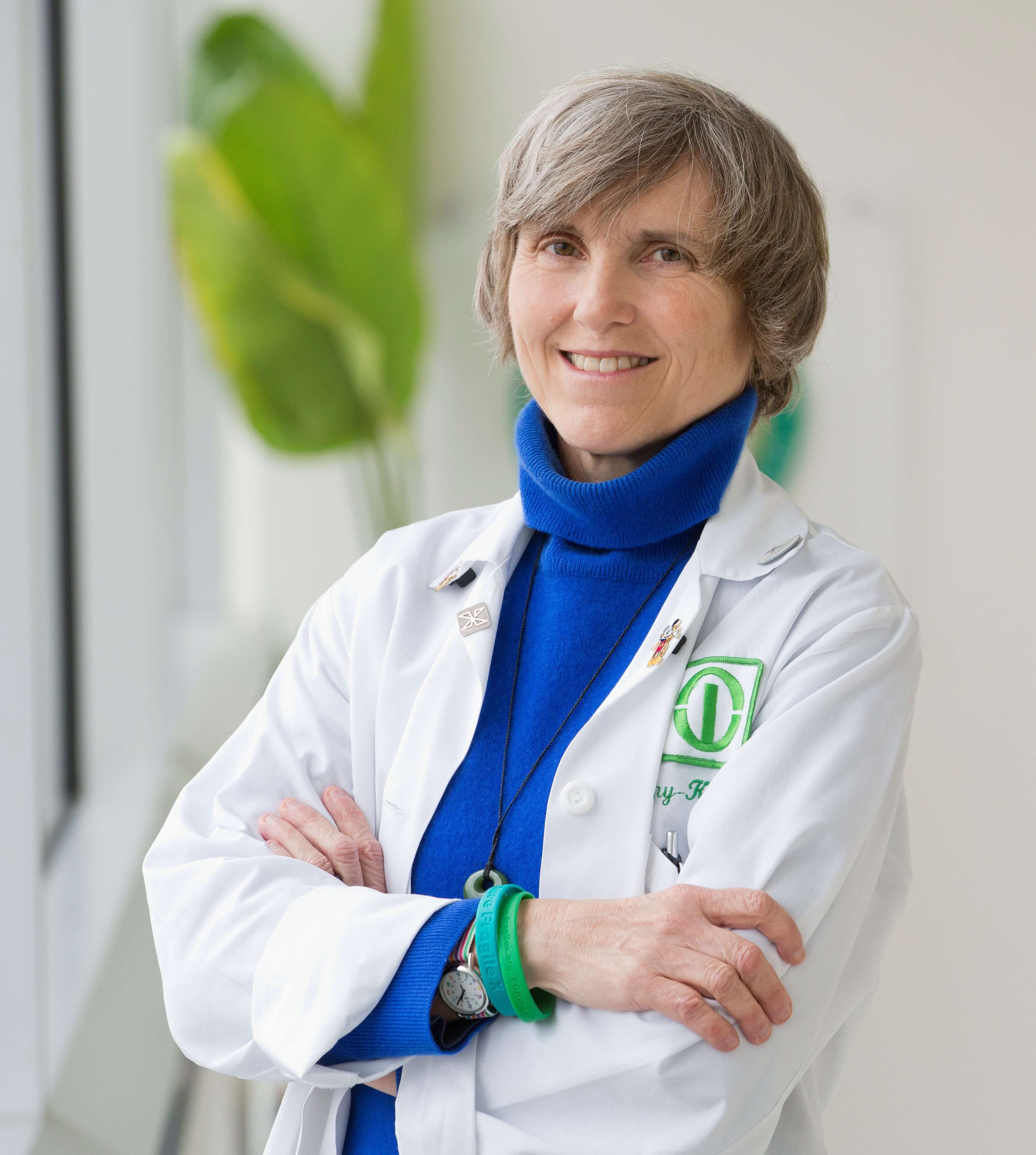
Berry-Kravis could not have anticipated that she would fall into the fragile X field, but from a very young age, she knew she wanted to go into neurology.
In the seventh grade, she read a book on neurosurgery about a child who had a brain tumor. Although she didn’t know much about the field, she was inspired to carve out a career in the neurological sciences.
“That’s what I said I’d do for the rest of grade school and high school,” she said.
A South Bend native, Berry-Kravis attended St. Joseph’s High School where she dove head-first into her studies and enrolled in honors classes that were of great interest to her. In the mid-’70s, her presence in those classes was notable.
“When I was in high school, in the honors math and science classes, there were way fewer girls than guys. In fact, I believe I was the only girl in honors physics and one of two girls in honors calculus,” she said.
Even though she was among the first cohorts of women admitted and enrolled at the University of Notre Dame, Berry-Kravis was not intimidated. Rather, she found that Notre Dame introduced her to people she could relate to.
“When I went to Notre Dame, I met a lot of other women who were like me. I didn’t really have that experience in high school,” she shared. “It was nice to be able to meet people that had similar interests in my dorm and so forth.”
She initially chose to attend Notre Dame because it was the most cost-effective option—her father, William B. Berry ’53, ’57 M.S., had been a professor of electrical engineering at the University. However, she also came from a long family line of Notre Dame graduates, which made it feel like the right fit.
While a student, she lived in Farley Hall and was involved with athletics, from basketball to running.
“I was on the Notre Dame women’s basketball team in its second year of existence, when I was a freshman. They weren’t recruiting scholarship athletes—that should be clear,” she laughed.
After she was cut from the team for missing practices for her lab classes and because new recruits made the quality of play higher, Berry-Kravis continued running on the track and cross country teams. Since the end of her sophomore year she has kept her hobby up, running four miles on weekdays and six on the weekends. However, it was really from her passion as a chemistry major that Berry-Kravis began paving her way during her undergraduate years.
The University had just launched its biochemistry concentration, which allowed her to take various classes in preparation for medical school. She also conducted research while a student and was invited to tutor in chemistry by the late professor Emil T. Hofman ’53 M.S., ’63 Ph.D.
“I had the whole chemistry course memorized,” she said. “The volume of information in medical school is much larger than the volume in college, but the difficulty of information I did not think was vastly different.”
After Notre Dame, Berry-Kravis was accepted into University of Chicago’s competitive Medical Science Training Program (MSTP), a six-year program where she completed her medical degree and Ph.D.
After she finished medical school and her pediatric residency, which she’d also completed at the University of Chicago, Berry-Kravis soon found herself stumbling into the work of fragile X.
Early in her career, she studied a rare genetic disorder called pseudohypoparathyroidism, which was known to affect how cells produce a key signaling molecule. Because the condition was so rare, she and her team needed a comparison group and turned to patients with fragile X—then identified by a visible break in the X chromosome, though its gene had not yet been discovered.
What they found was unexpected: the fragile X patients showed an even greater disruption in this signaling process than the group she had originally set out to study. That discovery shifted the direction of her work, leading her to focus on fragile X at a time when it remained largely underexplored.
“In the process of doing this project, I was recruiting patients to my study and was communicating with a lot of families. The families wanted to have a clinic where they could go and that had doctors that specialized in fragile X, so I agreed to start a clinic,” she said.
Around the same time, scientists had identified the FMR1 gene responsible for fragile X, showing that the condition is caused by a mutation that is a repeating sequence in the DNA, which can expand across generations.
Today, Berry-Kravis has the second-largest clinic that specializes in fragile X and she continues to make progress in the field every day. As of now, her clinic and its researchers are making strides towards finding disease-targeted treatments—though they’ve had their ups and downs.
“Rather than treating symptoms, we were trying to treat the whole disease and fragile X was the first example of trying to do that in a developmental disorder,” she shared. “As a result, we thought we knew what we were doing, but we went into it fairly naïve simply because there was no precedent.”
Because this approach to treatment was new, Berry-Kravis and her team were not only testing unfamiliar methods, but also navigating a clinical trial process that had never been done in this way before. Over time, they encountered a range of challenges—from trial designs that did not fully capture the drug’s effects to setbacks with industry partners and shifting company priorities.
While they have seen partial successes, these obstacles have slowed progress toward FDA approval. Still, recent trials have shown promising results and Berry-Kravis remains optimistic that future studies will build on what they’ve learned.
Although the work with fragile X continues, Berry-Kravis’ work in the field has also informed the work of many other rare diseases—one of which hits close to home.
“I’m working on a variety of rare diseases, but the one most closely connected to Notre Dame is Niemann-Pick Type C—the disease that the three grandchildren of Ara Parseghian had,” she said.
The Ara Parseghian Medical Research Fund (APMRF) at Notre Dame is a nonprofit organization dedicated to finding a treatment or cure for Niemann-Pick Type C (NPC), a genetic disorder that disrupts the body’s ability to process cholesterol. The disease primarily affects children, with most not surviving past adolescence.
At Notre Dame’s 2014 Rare Disease Day, Berry-Kravis met a family whose daughter had been diagnosed with Niemann-Pick Type C (NPC). At the time, her work had focused primarily on fragile X, but she had started a multi-patient compassionate use protocol—also known as expanded access—which allows patients to receive an investigational treatment outside of a formal clinical trial. She was already treating two patients and added the patient she met at Rare Disease Day.
As more families approached her seeking treatment options for NPC, she enrolled many patients not eligible for trials and has treated them for years, some for over a decade, while accumulating data on their progression and survival that now will form the basis for possible FDA approval of the treatment. Throughout these years, Berry-Kravis has collaborated closely with APMRF.
Across all of her work with rare diseases, the health and well-being of her patients and their families remain at the center of her mission.
“We have kids who are alive today because of our work and that’s the ultimate fulfillment,” she said.
For those with similar aspirations, she counsels that the pursuit of such work may not lend itself to much sleep.
“It turns out people don’t really like that answer,” she joked, before adding, “when you’re trying to build your career, find something you can be an expert in.”
In her own career, she found that once she studied one disease, patterns began to emerge across others, highlighting just how essential collaboration is within the medical field.
“Over the years, I’ve gone in a lot of different directions and collaborated with a lot of people. It really allows you to do better clinical research. You can’t keep things in your own space.”
She now has three adult children working in various fields, from teaching to neuroradiology to computer programming for high-speed trading. When people ask her what the future holds, she remains as certain as she was in the seventh grade.
“When people ask me, ‘Are you going to retire?’ I think, ‘Well, what would I retire to do?’
“I’m already doing what I want to do most.”


