
When disaster strikes and buildings collapse, first responders know that every minute matters. Searching for survivors is dangerous, demanding tools that can navigate narrow gaps and unstable debris. Imagine a future where the first rescue option isn’t sending a human into harm’s way—it’s sending a robot.
Nathaniel Hanson, Ph.D., ’19 and his team at MIT Lincoln Laboratory are working toward that future. Their mission: designing advanced sensing technology and innovating disaster relief.
As a technical staff member in the Human Resilience Technology group at the Massachusetts Institute of Technology (MIT) Lincoln Laboratory, Hanson serves as a researcher and adviser to the U.S. government on applying technology to humanitarian assistance and disaster relief operations.
“We ask how we can take technology oftentimes that’s been developed in a very sterile, academic research lab, improve it, and transition it to operational use so it can help people,” Hanson says.
Hanson’s interest in emergency response began as an undergraduate in Notre Dame’s College of Engineering as a computer engineering student. What began as a capstone final project in Professor Jane Cleland-Huang’s Software Development for Unmanned Aerial Systems course blossomed into a groundbreaking technology that could assist members of rural communities. As juniors, Hanson and his classmate, Zachary Kousens ’19, sought to augment emergency medical response, particularly response that requires bystander intervention.
“Can we deliver defibrillators via drone? Can we deliver Narcan, other forms of medicine? ... If we could beat the first responders coming by ambulance and help stabilize people, we thought there was a really good amount of social good that could arise from this project.”


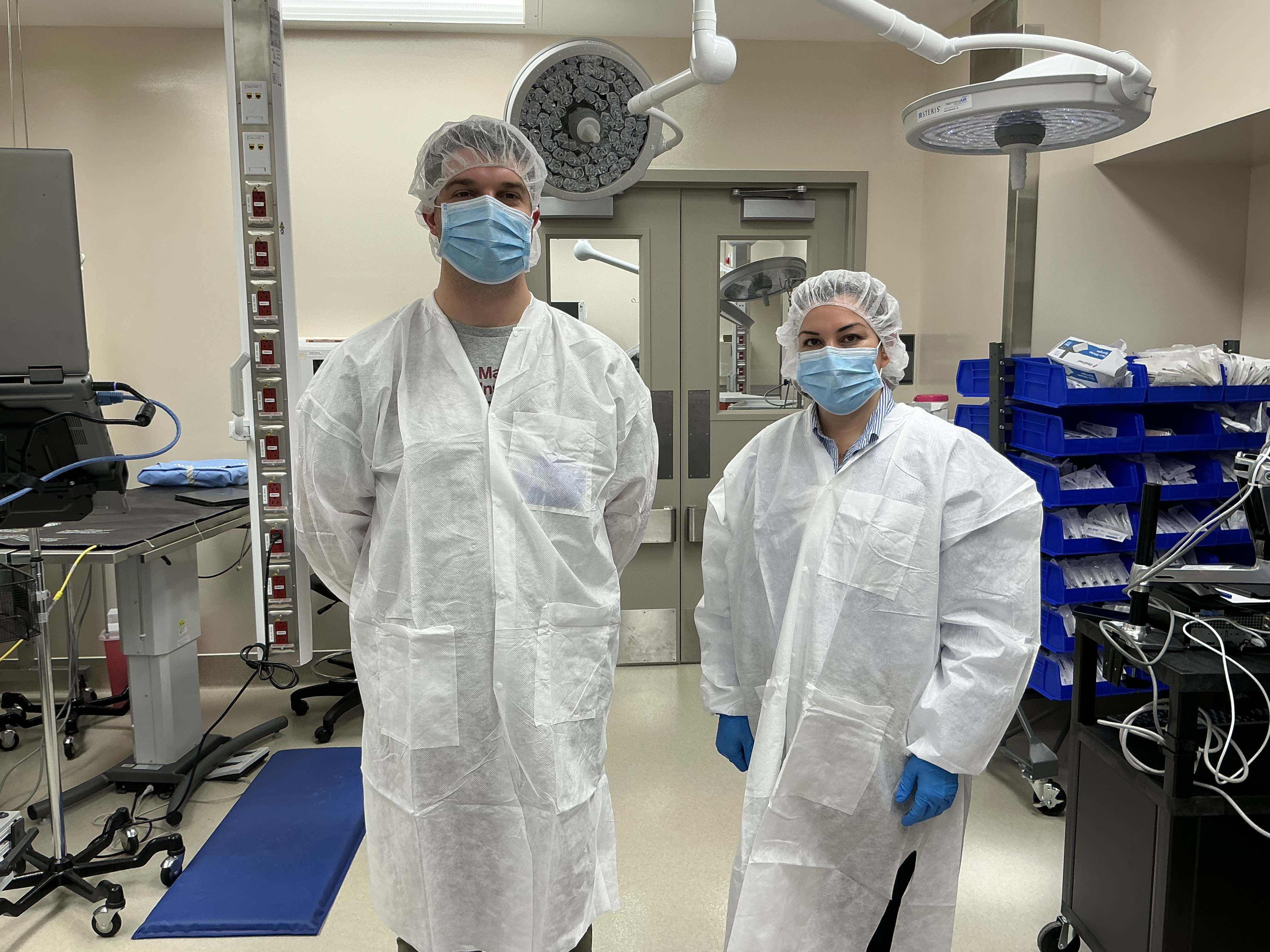

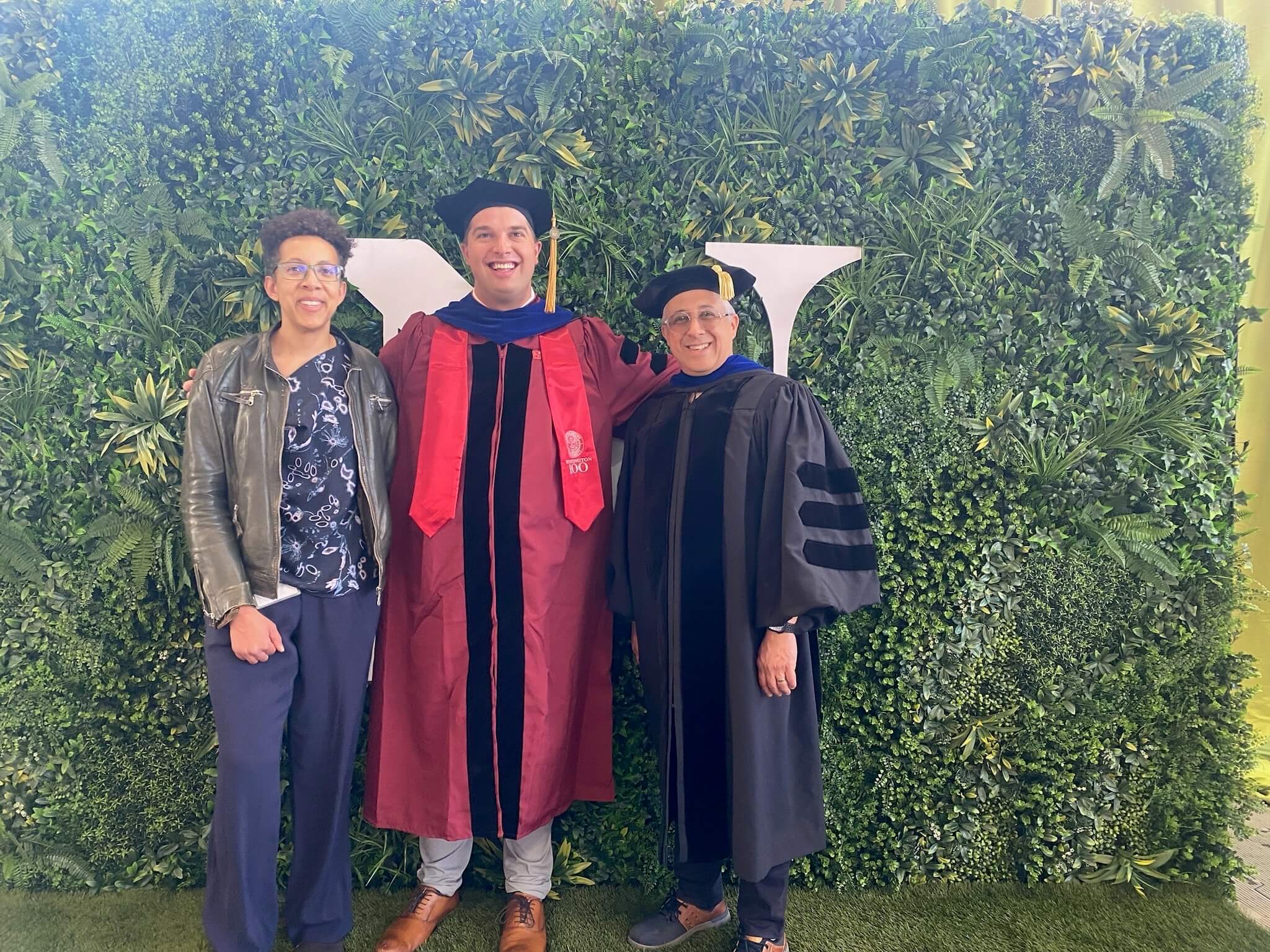
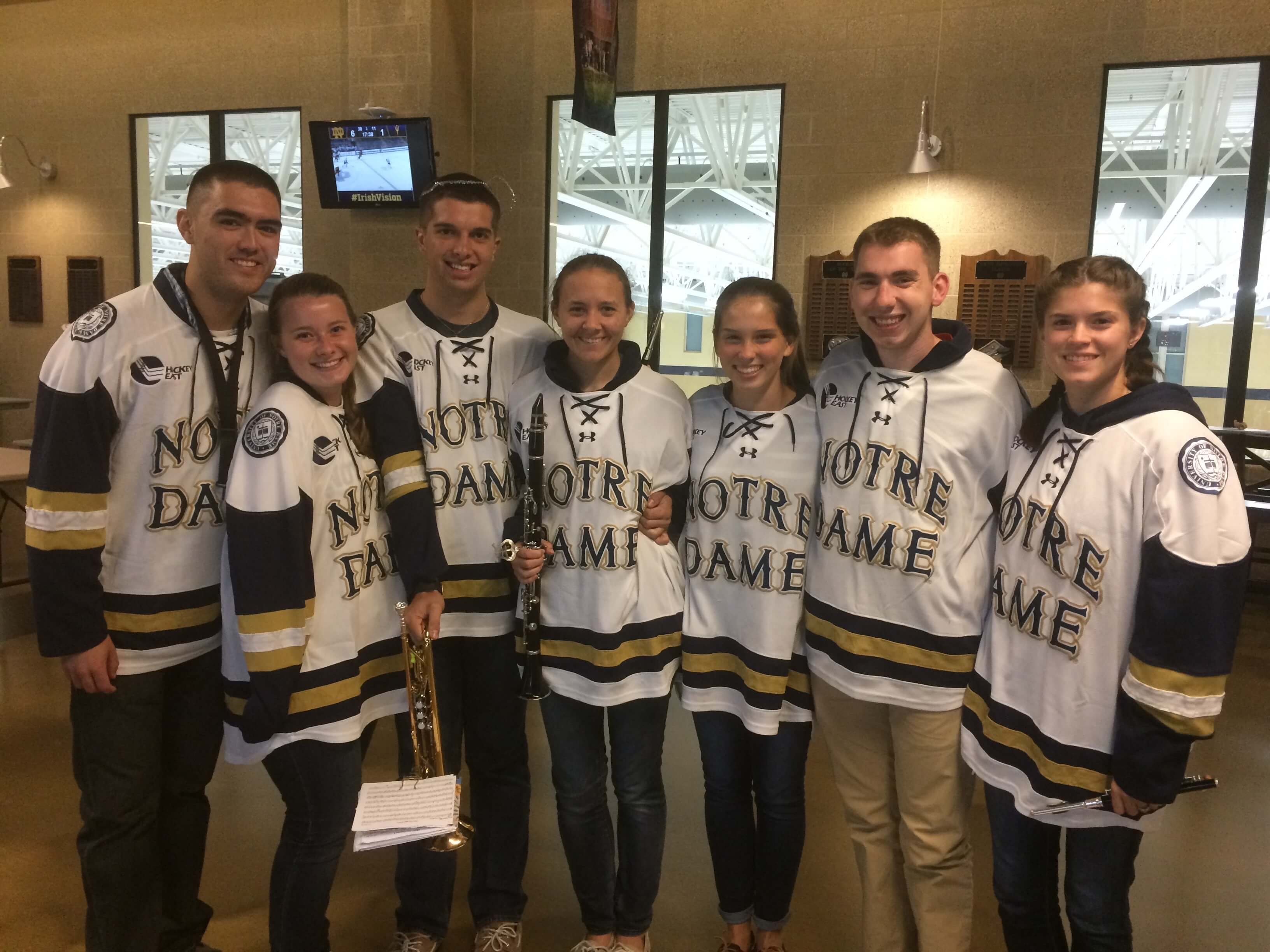
Together, Hanson and Kousens began working with the IDEA Center to explore and connect with first responders across the country to enable aerial delivery of medicine through their start-up, DeLive. Although Hanson and Kousens pursued alternative careers in graduate school and the United States Air Force, respectively, DeLive’s technology was transferred to Notre Dame and Hanson has remained passionate about leading technological innovation in emergency response ever since.
After Notre Dame, Hanson earned his master’s in computer science from Boston University in 2020 and earned his Ph.D. in computer engineering from the Northeastern University Institute for Experiential Robotics in 2023, where he researched ways of enabling robots to work in unstructured, complicated environments.
“Everyone wants robots to perform tasks that are dull, dirty, or dangerous,” he says. “But, one of the biggest barriers to achieving robotics that are pervasive in our world is robots that are able to understand and physically manipulate specific objects.
“Humans are really good at subconsciously inferring that material is a fundamental property that uses objects with certain friction, weight, hardness—those are things that robots are terrible at doing.”
As a Ph.D. candidate, Hanson studied and built sensors that could enable robots to manipulate objects and chemically sense the material composition to navigate different surfaces.
Now taking abstract ideas and applying research to creating technologies for disaster response and assessing traumatic injuries in the MIT Lincoln Laboratory, Hanson employs his expertise in imaging spectroscopy to develop scanners that assist physicians in assessing third-degree, full-thickness burns to preserve as much living tissue as possible and to shorten a victim’s recovery time. With further studies, the lab is pushing to make this technology available in hospitals.
But for the 2025 Domer Dozen honoree, one project stands out as the “clear winner” in realizing the meaningful impact of his research on real-world, life-saving applications. He and his group largely support the urban search-and-rescue community in wake of catastrophic structural collapses, especially in buildings that occupy people.
“Ultimately, if you want to find people, you’re going to have to get into the rubble pile and get into a void space,” Hanson explains. Their mission aims to help first responders rapidly locate those void spaces—or areas of a building that are fully enclosed by walls, floors, or facades—and extract trapped victims.
That challenge pushed Hanson and his group to think more deeply about what kinds of robots could safely enter collapsed structures—particulary buildings with people to be rescued—without putting rescuers at risk. In brainstorming robots that first responders can sacrifice in these disaster scenarios, Hanson and his group connected with Notre Dame aerospace and mechanical engineering professor Margaret McGuinness, who specializes in vine robots.
Vine robots are soft, flexible robots that grow by inflating folded tubing with compressed air, allowing them to extend into spaces traditional robots can’t reach and deliver sensors into confined spaces. Together, they wrote a grant, “Vine Robots For Collapsed Structure Mapping,” to build and develop technologies that enable search and rescue teams to find those trapped under rubble. International, federal, and civil stakeholders have taken interest in the novel soft robotic platform, with a structure described by Hanson as “a mixture of a balloon animal and a hose wheel.”
As the team continued developing these tools, questions about the role of artificial intelligence naturally followed. With the rise of AI that has dramatically changed how people approach problems and technical challenges, Hanson hesitates to view it as an all-powerful solution: “I have a mixed relationship with AI.”
While AI is a powerful tool, Hanson and his team largely use it in an administrative capacity. The tools they use enable engineers to work faster and automate some boring tasks, mainly in mission planning, scenario development, and prototype code development. But when it comes to life-or-death environments, AI is an assistant—not a replacement—for human judgement. “[First responders] want to remain in command of autonomous systems,” Hanson asserts.
Hanson’s perspective on responsible AI use extends beyond his search-and-rescue efforts. Through curriculum-development collaborations with the MIT Media Lab, Hanson also helps make AI education more accessible. These initiatives promote AI literacy and the fundamentals of how systems are built and trained to give those with non-technical backgrounds the tools necessary to critically think about AI and not fall for false promises.
As a mentor with the Department of the Air Force-MIT AI Accelerator, Hanson advises military personnel through both short-term and long-term projects that focus on using AI to solve concrete, tangible problems. In guiding military participants not only how to build AI systems but also how to use AI ethically and responsibly, Hanson often prompts with questions: “Why am I building this? How is it going to be used? Could it be used in some way it wasn’t intended?”
While Hanson avoids imposing his own thoughts, he encourages people to think about the potential for exploitation, misuse, and the risk of “opening a Pandora’s box.”
In November 2025, Hanson and his wife, Stephanie ’19, who serves on active duty in the U.S. Air Force and also earned a bachelor’s in computer engineering, returned to Notre Dame to speak on a First-Year College of Engineering panel to inspire students to engineer for the common good. Hanson optimistically anticipates that as hardware becomes less expensive, robots will become more expendable, allowing them to enter more dangerous scenarios and ideally save human lives.
“My philosophy on robotics is that we should be using robots in any place where the work doesn’t elevate human dignity.”


